Coastal wastewater works face a difficult combination during storm peaks: fast hydraulic change, diluted sewage, grit and road runoff, salt influence in some networks, and public sensitivity around receiving waters. Operators may have very little time to protect settlement, sludge handling and final effluent quality.
Polymer can help in some parts of that response, but only if it is used as a controlled tool rather than a panic button.
Know Which Process Is Under Stress
Storm peaks can affect primary settlement, secondary clarification, tertiary solids removal and sludge dewatering. Each duty may need a different response. Anionic products may support mineral-heavy clarification. Cationic products may support sludge conditioning. One polymer should not be expected to solve every storm symptom.
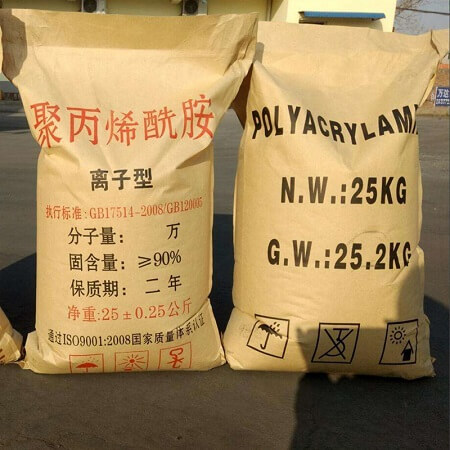
The product conversation should begin with the process duty. A PAM flocculant supplier can suggest sample ranges, while anionic polyacrylamide and cationic polyacrylamide references help frame the difference between clarification and dewatering applications.
Jar Test Before The Weather Arrives
The best storm response is prepared in dry weather. Collect representative samples during previous events where possible. Test likely polymer ranges, coagulant combinations and mixing conditions. Build a small playbook before the next peak arrives.
During the event, quick jar checks can confirm whether the stored playbook still applies. Water quality may change between storms. First flush can be very different from later flow.
Protect Floc From Shear
High flow usually means higher turbulence. Polymer added into the wrong location may form floc and then immediately destroy it. Injection point, dilution and mixing energy are critical. Operators should watch whether floc survives from the dosing point to the separation stage.
Overdose is also a risk. A desperate increase may create slimy floc, poor settling or downstream sludge problems. The storm playbook should include maximum dose limits and reduction steps after the peak passes.
Link Storm Response To Sludge Handling
Storm solids do not disappear. If polymer helps capture more solids, sludge handling may see a delayed load. Dewatering teams should know when a storm programme has been used so they can watch feed solids, cake behaviour and centrate quality.
For procurement teams, broader polyacrylamide supplier resources are useful, but storm response should be tested locally. Coastal works have different hydraulics, consent risks and public pressures.
Review After Each Event
After the storm, review dose, timing, clarity, sludge load and operator comments. The next event should start with better knowledge. Coastal wastewater resilience is built through repeated learning, not one heroic chemical adjustment.
Good floc control during storm peaks is calm, prepared and reversible. It supports compliance without creating a new problem downstream. <!-- seo-depth-expansion -->
Evidence Pack for Technical Review
During scale-up, for Coastal Wastewater Storm Peak Floc Control, assemble a time-matched baseline before changing product or dose. The pack should show flow, feed solids, pH, temperature, current chemical consumption, outlet quality, sludge condition, equipment settings, and the production events that change the wastewater during the plant trial. For consent review, use representative composite samples where the load varies across shifts, batches, rainfall, or cleaning cycles.
During a trial, record the candidate grade and batch, preparation concentration, solution age, calibrated pump output, injection point, and the time allowed to reach steady state during the plant trial. For the evidence pack, pair laboratory results with operator observations and downstream effects. A lower turbidity result has limited value if sludge volume, cake dryness, filter loading, consent risk, or labour becomes worse during the plant trial.
Stop, Continue, and Procurement Criteria
During the technical review, set numerical or clearly observable limits for Coastal Wastewater Storm Peak Floc Control before the test begins. Stop when the discharge or safety limit is threatened, the feed changes outside the agreed envelope, floc breaks before separation, or the chemical system cannot hold the intended dose during the plant trial. For the operator record, continue only after the cause is documented; otherwise extra run time adds noise rather than confidence.
The procurement comparison should normalise active dose and include delivered price, packaging, lead time, technical attendance, make-down requirements, sludge disposal, and any effect on compliance or production continuity during the plant trial. At the dosing skid, keep unsuccessful doses in the report so a future team does not repeat them. This evidence turns coastal wastewater storm peak floc control from a general recommendation into a repeatable UK site decision during the plant trial.