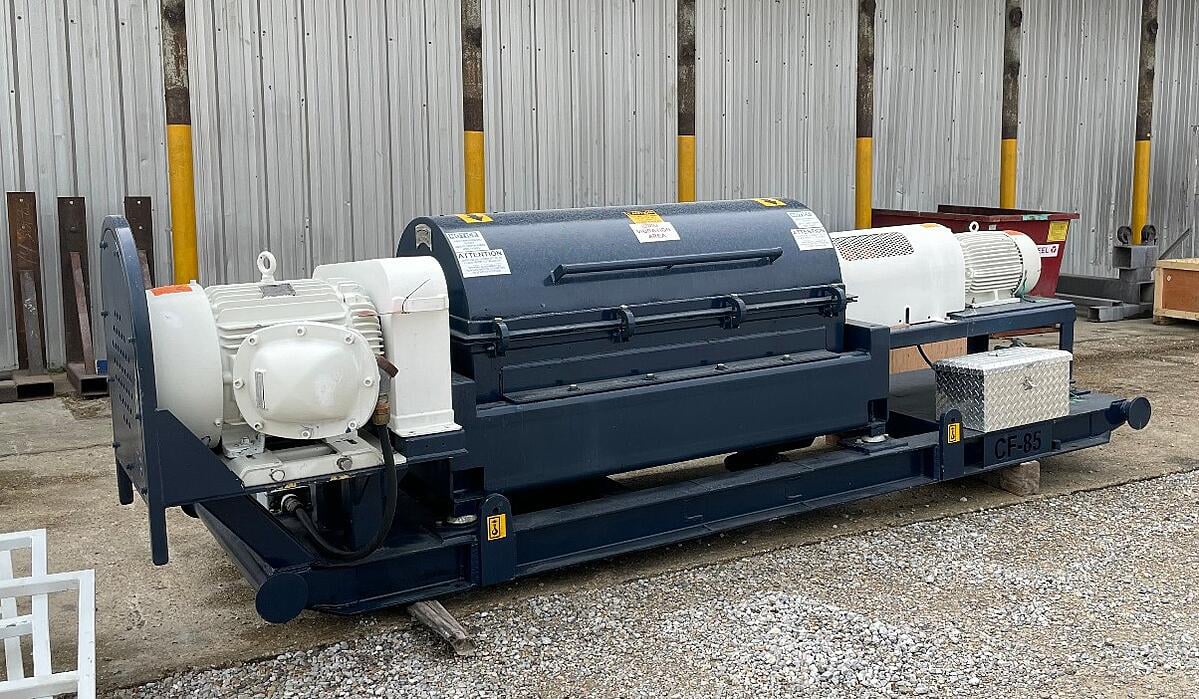
An emulsion PAM quote for centrifuge dewatering is incomplete without its preparation requirements. The proposed product must become a usable solution in the actual make-down system before its separation performance can be judged. A nominal pump capacity tells buyers little if inversion, dilution or solution residence time prevents the system from supplying the required polymer continuously.
Identify what is being supplied
Request commercial product identity, reported polymer content and its stated basis, density where needed for volumetric metering, and current safety and technical information. Do not compare litres of one emulsion with kilograms of powder as if they contained the same polymer. Also distinguish neat emulsion from the prepared solution delivered to the centrifuge.
Discuss candidate supply with Xinqi's polymer team and use the cationic product range to frame the sludge application. The written offer should identify the exact sample grade, not only a broad description such as high molecular weight.
Check the make-down equipment
Provide the supplier with water pressure, flow, temperature range and relevant water-quality information, together with the unit model and available controls. Ask for product-specific inversion, mixing, maturation and subsequent dilution instructions. Do not assume the incumbent recipe applies unchanged, or that simply adding more water will correct incomplete preparation.
Confirm usable solution production at the highest expected solids load. Include turndown at the low end and the effect of interruptions. The equipment and chemical suppliers should agree any proposed changes before commissioning rather than leaving the operator to reconcile incompatible instructions.
Validate before comparing doses
Check the preparation stage for visible defects and verify delivered solution flow by an appropriate site method. Then compare dewatering results on representative feed. Record recipe, water conditions, solution age and batch identity alongside cake and centrate samples. Otherwise a preparation fault may be wrongly recorded as poor chemistry.
Put interfaces into the order
Separate chemical supply, preparation-unit changes, installation and technical attendance. Define who confirms materials compatibility and the safe changeover procedure. Require written storage guidance and a response process if a new batch behaves differently. Purchase approval should follow a repeatable combined preparation-and-dewatering trial, not a quotation that leaves all equipment assumptions to the buyer.
Prepare the next purchasing step
For the underlying operating checks, read Polymer Make-Down System Checklist for Stable PAM Performance. Include the relevant feed information, equipment, planned quantity and delivery location when requesting a product quotation or sample. Agree the trial scope before placing routine supply.