It was a muggy Thursday afternoon in late July 2025 when my phone rang. The site manager at a large aggregate quarry in the Peak District — I’ll call them Millstone Aggregates, though that’s not their real name — was clearly at the end of his tether. His exact words were something like: “Stephen, I don’t care what it costs to get you up here, just come. The press filters are backing up, the settlement lagoon is half full, and our disposal contractor just told us they’re putting prices up again in September.”
I cleared my diary for the following Monday, packed the sampling kit, and drove north. I’ve been doing this long enough to know that when a quarry manager sounds that stressed, the problem usually has at least two or three layers to it — and sorting the chemistry is often only part of the fix.
What I found when I arrived was a classic high-clay tailings dewatering challenge, the sort that’s become increasingly common as UK quarry operators push into deeper material horizons with higher clay fractions. The site was running two Diemme recessed-plate filter presses, each with a 2-metre cycle time that had crept up to nearly 3.5 hours over the preceding six months. Filter cake moisture was sitting at an average of 34.2% by weight — well above the target of 25% that their disposal contractor required for efficient haulage. And their existing polyacrylamide programme — a generic medium-charge anionic product they’d been running on a rolling supply contract — was consuming 12.4 kg active polymer per tonne of dry solids with diminishing returns.
The result was a disposal cost problem that was becoming genuinely serious. And in 2026, with the regulatory backdrop shifting underneath the entire UK aggregates sector, “serious” was rapidly becoming “existential” for some sites.
The Regulatory and Commercial Context: 2026 Isn’t Getting Any Easier
Let me spend a moment on the wider picture, because it’s directly relevant to why the pressure on quarry operators right now is so acute.
The updated Mining Waste Directive guidance, which the Environment Agency began enforcing more rigorously from Q1 2026 following the post-Brexit review of retained EU environmental law, has tightened the requirements around tailings management at aggregate extraction sites. Specifically, the revised interpretations around “inert waste” classification mean that many quarry operators who previously disposed of dewatered tailings under simplified permit conditions are now required to demonstrate compliance with tighter leachate and moisture content thresholds. The practical consequence is that wet cake — the kind you get when your sludge-dewatering chemistry isn’t optimised — is harder and more expensive to dispose of legally.
At the same time, haulage and landfill costs have continued to rise. Millstone Aggregates was paying approximately £47 per tonne for tailings disposal in mid-2025, up from £31 per tonne in 2022. That’s a 52% increase in three years. When you’re generating 8,000–9,000 tonnes of wet cake annually, the numbers become very uncomfortable very quickly.
The combination of regulatory tightening and cost escalation is pushing quarry operators to look seriously at their wastewater-treatment chemistry in a way that many simply didn’t bother to do when disposal was cheap and enforcement was lighter. I’ve seen this pattern before — it took a similar confluence of pressures in the mid-2000s to drive serious polymer optimisation in the water utility sector. The quarrying industry is going through its version of that now.
Understanding the Problem: What Made This Tailings Stream Difficult
The first thing I did on-site was spend half a day just observing and sampling. I’m a firm believer that you don’t pick up a jar test kit until you understand what you’re actually dealing with. Too many people jump straight to the chemistry without doing the basic diagnostic work.
Millstone’s tailings stream came from washing operations on a mixed limestone and gritstone quarry. The washwater circuit was generating a feed slurry to the filter presses with:
- Total Suspended Solids (TSS): 38,000–52,000 mg/L (highly variable by production shift)
- Clay mineral fraction (< 2 micron): approximately 28–35% of total solids — very high
- pH: 7.8–8.4 (alkaline, consistent with limestone-dominated feed)
- Zeta potential: -18 to -24 mV
- Particle size D50: approximately 12–18 microns — fine material dominating
That clay fraction was the crux of the issue. High-clay tailings are notoriously difficult to dewater efficiently. Clay particles are extremely fine, carry significant negative surface charge, and have a strong affinity for water — they resist compaction in a filter press in a way that coarser mineral tailings simply don’t. The existing pam-flocculant programme had been selected years earlier when the clay fraction was lower — around 18–22% — and hadn’t been reviewed since.
I also noticed something the plant team had missed: the polymer make-down system was running at a solution concentration of 0.5% w/v, which for a high-molecular-weight anionic product is on the high side. Viscosity at that concentration was limiting the effective dilution and distribution of the polymer before the contact point with the slurry. Small things matter. They always do.
Jar Testing: Finding the Right Anionic PAM for This Specific Stream
I want to be clear about something: there is no universal “best” anionic-polyacrylamide for quarry tailings. Anyone who tells you otherwise is selling something. The right product for a limestone-dominated, high-clay, alkaline slurry at pH 8.1 is almost certainly different from the right product for a granite quarry’s silica-rich, lower-pH waste stream. This is why jar testing — systematic, rigorous, done with fresh representative samples — is non-negotiable.
I’ve written in detail about the methodology elsewhere. If you want the full framework, my article on Why Jar Testing is the Foundation of Effective PAM Treatment covers it comprehensively. What I’ll do here is walk through the specific protocol we used for this application and what it told us.
We tested eight candidate products across three variables:
1. Anionic charge density (ionicity): 20%, 35%, and 50%
2. Molecular weight: Medium-high (12–15 MDa) and Very high (18–22 MDa)
3. Physical form: Granular powder (make-down at 0.2% w/v) vs. inverse emulsion
For the jar test procedure, we used 500 mL of freshly collected feed slurry in each vessel, with polymer doses ranging from 60 to 200 g active/tonne of dry solids — the typical working range for mineral tailings applications. Fast mix 150 rpm for 45 seconds, slow mix 30 rpm for 4 minutes, then 10 minutes settling. We measured:
- Supernatant clarity at 5 and 10 minutes (turbidity in NTU)
- Floc settling rate (visual estimate, cm/min)
- Floc robustness (visual scoring 1–5, with 5 being large, cohesive, easily drained)
- Buchner funnel filtration rate (mL filtrate collected in 2 minutes under standard vacuum)
- Filter cake solids content after 2-minute vacuum filtration
The results were genuinely interesting — and a bit surprising in one respect that I’ll come to.
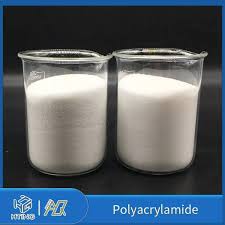
The standout performer was a very-high-molecular-weight (19.8 MDa), medium-ionicity (30%) anionic PAM in granular powder form, made down at 0.15% w/v.
At an optimal dose of 110 g active/tonne DS, it achieved:
- Supernatant turbidity at 10 minutes: 22 NTU
- Settling rate: 8.4 cm/min
- Floc score: 4.8/5
- Buchner filtration volume (2 min): 380 mL (vs. 210 mL for the existing product)
- Filter cake solids: 29.6% DS
The existing product — a 35% ionicity, medium-high molecular weight anionic — managed 24.1% DS at its optimal dose of 140 g/tonne DS. Better than the full-scale performance, but still significantly inferior to the winning candidate.
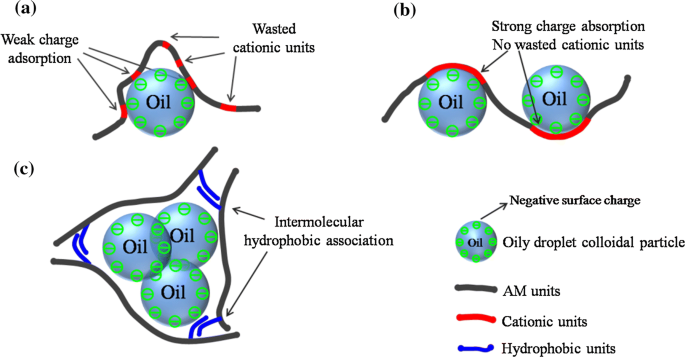
Why did the slightly lower ionicity win? This surprised me slightly, I’ll admit. With a zeta potential of -18 to -24 mV, I’d expected a 35–40% ionicity product to be the sweet spot. But the very high molecular weight of the winning product appeared to be driving superior bridging flocculation — the long polymer chains were physically linking clay particles across distances that shorter chains couldn’t bridge, even if the charge neutralisation was slightly less efficient. The clay mineral fraction, with its platelet structure and high surface area, responded particularly well to this bridging mechanism. In my experience with high-clay systems, molecular weight often matters more than ionicity, as long as you’re in the right charge density ballpark.
The lower make-down concentration (0.15% vs. 0.5%) also made a real difference. At 0.15%, the solution viscosity was low enough that the polymer was fully hydrated and well-distributed before it contacted the slurry. Better contact, better performance. Simple physics.
For a broader discussion of how anionic-polyacrylamide selection varies across different industrial applications — and why quarry tailings behave quite differently from, say, paper mill effluent — I’d point you to my earlier piece on Anionic PAM in Industrial Wastewater, which covers the underlying principles in more depth.
A Cautionary Tale: The Time I Got the Molecular Weight Wrong
While I’m on the subject of jar test surprises, let me tell you about a project from about six years ago that I still think about occasionally. A sandstone quarry in Derbyshire — different geology, but similarly high clay content. I ran the jar tests, identified what looked like an excellent candidate: very high molecular weight, 40% ionicity, powder form. Brilliant settling performance in the jar test. Supernatant clear as tap water.
We went to full scale. And for the first two days, it was magnificent. Then the problems started.
The filter cake was behaving oddly under press pressure. Instead of compacting and releasing water, it was compressing into a sticky, almost gelatinous mass that clung to the filter cloth and was extremely difficult to discharge. Cycle times, rather than improving, got worse. The plant team thought I’d lost the plot.
What had happened — and it took me an embarrassingly long time to work out — was that the very high molecular weight product was creating an excessively cohesive floc structure that was actually impeding drainage under the high pressures of the filter press. The floc was strong enough to resist the dewatering force being applied to it. In a settling clarifier, that would have been fine — great, even. In a pressure filtration application, it was counterproductive.
We stepped back down to an 18 MDa product — still high molecular weight, but not in the ultra-high range — and the problem resolved. Filter cake became handleable, cycle times dropped back, and we got the performance we needed.
The lesson: jar test methodology needs to reflect your actual dewatering equipment. A Buchner funnel vacuum test is an adequate proxy for pressure filtration, but you need to apply realistic pressure ranges and check not just the drainage rate but the cake structure. I’ve added that step to every jar test protocol I run for filter press applications since that Derbyshire job.
Full-Scale Implementation: Getting from Lab to Plant
The changeover at Millstone Aggregates took about ten days, end to end. We made two process changes simultaneously: switching to the new product and adjusting the make-down concentration from 0.5% to 0.15% w/v. We also increased the make-down tank residence time slightly — from approximately 25 minutes to 40 minutes — to ensure full hydration of the granular product before dosing.
The first week was a careful dial-in. We started at the lab-optimal dose of 110 g/tonne DS and adjusted upward or downward based on real-time filter press performance. The press operators quickly noticed the difference — floc formation in the feed manifold was visibly improved, and the initial drainage phase of the press cycle was noticeably faster.
By the end of week one, we’d settled on a working dose of 105 g/tonne DS — slightly below the lab optimum, which isn’t unusual; full-scale mixing conditions are often slightly more effective than the jar test. Press cycle times had dropped from 3.5 hours to 2.1 hours. That’s significant — it meant the two presses could collectively process more material per shift, which had knock-on benefits for the entire washwater circuit.
We also installed a turbidity monitor on the lagoon overflow to track the improvement in clarification performance. Within two weeks of the switchover, overflow turbidity had dropped from a variable 380–650 NTU to a consistent 45–80 NTU — a significant improvement that directly reduced the suspended solids load on the settlement lagoon and improved recycle water quality back to the wash plant.
The sustainable-water-treatment aspect of that last point is worth emphasising. Better wastewater-treatment chemistry doesn’t just save money — it means the recycle water going back into the wash plant is cleaner, which in turn means less fresh water abstraction. On a site with a water abstraction licence, that’s both an environmental benefit and, increasingly, a regulatory compliance issue.
The Numbers: A Genuine 28% Cost Reduction
Here’s where it gets satisfying. The full before-and-after comparison, based on six months of operational data from August 2025 through January 2026:
Before optimisation (Q1–Q2 2025 average):
- Filter cake moisture content: 34.2% by weight
- Polymer consumption: 12.4 kg active/tonne DS
- Annual tailings to disposal: approximately 8,600 tonnes wet weight
- Annual polymer cost: £94,000
- Annual tailings disposal cost (at £47/tonne): £404,200
- Total annual combined cost: £498,200
After optimisation (Aug 2025–Jan 2026 average):
- Filter cake moisture content: 22.8% by weight
- Polymer consumption: 8.9 kg active/tonne DS (new product at higher unit cost per kg, but significantly lower dose)
- Annual tailings to disposal (same dry solids, far less water): approximately 5,850 tonnes wet weight
- Annual polymer cost: £79,000
- Annual tailings disposal cost (at £47/tonne): £274,950
- Total annual combined cost: £353,950
Total annual saving: £144,250 — a 28.9% reduction. I’ve rounded to 28% in the headline because I don’t want to overstate it — six months of data is a solid evidence base but not a full year, and there’s always some variability.
The payback on the project — consultancy fees, product changeover costs, minor equipment modifications to the make-down system — was under two months. The site manager, who had sounded so stressed on that July phone call, rang me in February to say it had been the best money the site had spent in five years. I appreciated that. It’s not always so clear-cut.
How This Compares to Other Industries: A Brief Contrast
It’s worth noting that the principles here — systematic jar testing, matching polymer properties to specific waste stream characteristics, optimising make-down conditions — apply across sectors. I wrote recently about a similar optimisation exercise at a food and beverage processing plant, where the challenge was quite different: high-organic-load biological sludge rather than mineral tailings. In that case, the solution was a high-ionicity cationic product rather than an anionic one. But the methodology was identical. If you want to see how the same approach plays out in a completely different industrial context, have a read of How the Right Cationic Polyacrylamide Cut a UK Food Plant’s Sludge Dewatering Costs by 22% — it illustrates nicely how different waste streams demand fundamentally different polymer strategies.
The contrast is a useful reminder of something I say to clients fairly regularly: there is no such thing as a universal pam-flocculant solution. The chemistry has to fit the problem. Anionic products work with the natural surface charge of mineral particles; cationic products are needed when you’re dealing with the negatively charged organic colloids in biological sludge. Getting that fundamental call wrong is the most expensive mistake you can make, and it happens more often than the industry likes to admit.
What Quarry Operators Should Be Asking Right Now
If you’re running an aggregate or mineral processing operation and you haven’t reviewed your polyacrylamide programme recently, here are the questions I’d be asking:
- When was your product last jar-tested against your current tailings composition? If the answer is “more than 18 months ago” or “never,” that’s a problem.
- Has your clay fraction changed as you’ve deepened your extraction? Almost always, the answer is yes — and clay fraction is probably the single biggest driver of polymer performance in mineral tailings applications.
- What concentration is your polymer being made down at? High-MW anionic products are frequently overdiluted or underdiluted. Both cause performance problems.
- Are you measuring cake solids consistently? Not just eyeballing the cake on discharge — actually measuring moisture content? If not, you’re managing blind.
- Do you know what the revised Mining Waste Directive guidance means for your specific disposal route? If you’re uncertain, get advice now, not when you receive an enforcement notice.
The sustainable-water-treatment agenda in the UK extractives sector is only going to intensify over the next few years. Sites that get ahead of the curve on chemistry optimisation will be better placed — financially and regulatorily — than those that wait for a crisis to force action.
Wrapping Up
The Millstone Aggregates project is a good example of what systematic chemistry review can achieve in a relatively short timeframe. A 28% reduction in combined tailings disposal and polymer costs. Filter cake moisture down from 34.2% to 22.8%. Press cycle times reduced by 40%. Recycle water quality significantly improved. All from choosing the right anionic-polyacrylamide product, at the right dose, made down at the right concentration.
None of that is magic. It’s method. It’s spending a day doing proper jar tests instead of just accepting whatever the incumbent supplier sends on renewal. It’s understanding your waste stream before you try to treat it. It’s the unglamorous, detail-oriented work that makes a real difference to real operations.
If you want to explore the broader framework for translating laboratory polymer screening into full-scale cost savings — across quarrying, food processing, municipal biosolids, and other sectors — I’d recommend starting with From Jar Testing to Real Savings, which lays out the decision-making process I use regardless of industry. And if you’re thinking about whether a cationic product might be relevant at any stage of your process — perhaps in a secondary clarifier or biological sludge handling circuit — Cationic PAM for Sludge Dewatering covers that territory in detail.
One thing I haven’t yet covered in this series — and it’s a topic I get asked about regularly — is the interaction between pam-flocculant selection and belt filter press performance versus recessed plate performance. The dynamics are quite different, and the optimal polymer specification can diverge significantly between the two equipment types even on identical waste streams. That’s the subject of my next post. I’ll leave that as a reason to check back.
If you’re dealing with a tailings dewatering challenge, a product selection problem, or you’re trying to interpret what the updated Mining Waste Directive guidance means for your operation — leave a comment below, or get in touch through the contact page. I’m genuinely interested in the problems people are trying to solve. No product to sell, no supplier relationship to protect. Just experience.