November 2025. I got the call on a Wednesday evening — the kind that comes just as you’re settling in with a cup of tea and have absolutely no intention of going anywhere. The works manager at a large municipal sewage treatment works in the East Midlands — I’ll call it Fenside Water Recycling Centre, though that’s not its actual name — was, to put it diplomatically, not having a good week. Their two Alfa Laval centrifuges had been underperforming for the better part of four months. Cake solids were hovering around 18.1% dry solids on a good day, sometimes dipping below 17%. Their polyacrylamide consumption had crept up as operators tried to compensate by pushing the dose higher, and energy consumption on the centrifuge circuit was running noticeably above the site’s own benchmark figures.
“We’ve got an auditor coming in January,” he said. “And our disposal contractor has told us they’re reviewing the gate rate upward in the new year. I need something to change before then.”
I was on site by Friday morning.
What I found was a sludge-dewatering programme that hadn’t been properly reviewed in over three years. The site was dosing a medium-charge cationic-polyacrylamide — 35% ionicity, moderate molecular weight — that had been selected when the sludge blend was predominantly primary. Since then, the proportion of waste activated sludge in the blend had increased significantly following an aeration lane upgrade, and nobody had gone back to check whether the existing polymer was still fit for purpose. In my experience, that’s one of the most common and most costly oversights in municipal wastewater-treatment operations. The sludge changes. The polymer programme rarely keeps up.
The 2026 Context: Why the Pressure on Sewage Works Has Never Been Greater
Before I get into the detail of what we found and fixed, it’s worth spending a moment on the bigger picture, because the commercial and regulatory environment facing UK water companies and their treatment works in 2026 is genuinely demanding in a way that makes polymer optimisation a board-level concern rather than just a plant chemistry issue.
The net-zero commitments that UK water companies made under their PR24 business plans are now translating into hard operational targets. Energy consumption at wastewater-treatment works — and centrifuge dewatering is one of the most energy-intensive processes on any sewage site — is under direct scrutiny. Ofwat’s performance commitments are being monitored, and companies that fall short on energy efficiency or environmental performance are increasingly exposed to financial penalties.
At the same time, biosolids disposal costs have continued to rise sharply. Agricultural spreading — still the most economical route for compliant biosolids — is under increasing pressure from catchment sensitivity designations and the evolving regulatory position on nutrient neutrality in various river catchments. Incineration capacity is limited and expensive. The practical consequence is that water companies and their contractors are paying more per tonne for disposal year on year, and the incentive to squeeze every possible percentage point of dry solids out of the dewatering process has never been sharper.
Wet cake is expensive cake. That’s not a complicated insight, but it’s one that some sites have been slow to act on.
On top of all this, the updated Environment Agency guidance on biosolids quality — building on the Safe and Sustainable Use of Biosolids framework that’s been evolving since the early 2020s — is tightening the requirements around process performance records and polymer residual monitoring. The days of running on autopilot with an ageing polymer specification are effectively over for any site that wants to stay comfortably within its permit.
Understanding the Sludge: What Made Fenside’s Feed Difficult
I spent the first morning at Fenside just watching, sampling, and asking questions. The centrifuge feed at this site was a blended sludge — thermally hydrolysed primary sludge combined with waste activated sludge (WAS) from an extended aeration process — going through anaerobic digestion before dewatering. Post-digestion sludge is, in some ways, easier to work with than raw blended sludge because the volatile solids content is lower. But it brings its own challenges, particularly around the surface charge characteristics of the remaining organic solids and the presence of struvite precursors in the digester liquors.
The feed sludge characteristics I measured were:
- Total Solids (TS): 3.8–4.6% (variable by batch)
- Volatile Solids (VS) as % of TS: 58–64% — still high, indicating incomplete digestion on some batches
- pH: 7.4–7.9
- Zeta potential: -22 to -28 mV — strongly negative, as expected for high-organic biological solids
- Specific Resistance to Filtration (SRF): approximately 6.8 × 10¹³ m/kg — indicating a moderately difficult-to-dewater sludge
- Extracellular polymeric substances (EPS) concentration: elevated, consistent with a high-WAS fraction
That last point matters. Waste activated sludge is full of EPS — the sticky biopolymer matrix that microbial communities produce. High EPS concentrations interfere with polymer conditioning because the EPS itself consumes cationic polymer charge before it can do its job on the particles you actually want to flocculate. When the WAS proportion of a blend increases, you typically need either a higher-charge polymer, a higher dose, or both. The site had been doing the latter — pushing the dose up — without asking whether the charge density of their product was still appropriate. It wasn’t.
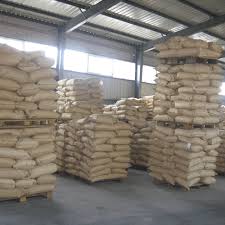
The existing product was a 35% ionicity cationic-polyacrylamide. For a mixed primary/secondary sludge with a modest WAS fraction, that might be entirely appropriate. For a digested sludge with 55–60% WAS contribution and elevated EPS, it was undershooting. The charge demand of the feed had moved; the polymer hadn’t.
Jar Testing: The Only Way to Find What Actually Works
Let me be direct: when I’m called into a site like Fenside, the jar test is where the answer lives. Not in supplier data sheets, not in what worked on a neighbouring site, and definitely not in what’s been on the supply contract for three years without review. Jar testing is the non-negotiable foundation of any serious polymer optimisation programme, and if you want to understand why in more depth than I’m going to cover here, my piece on Why Jar Testing is the Foundation of Effective PAM Treatment sets out the full methodology and the principles behind it.
For Fenside, we ran a structured screening across ten candidate products, varying three parameters:
1. Cationic charge density (ionicity): 40%, 50%, 60%, and 70%
2. Molecular weight: High (12–15 MDa) and Very high (17–20 MDa)
3. Physical form: All candidates tested as inverse emulsion (make-down at 0.2% w/v active), which is standard for centrifuge applications given the need for rapid hydration and dosing at speed
The jar test procedure for centrifuge polymer screening is slightly different from what I use for filter press or settling applications. We’re primarily interested in floc strength and drainage characteristics rather than settling velocity, because the centrifuge applies a G-force rather than relying on gravity settling. So the protocol was:
- 500 mL freshly collected centrifuge feed in each jar
- Dose range: 4 to 12 kg active polymer per tonne of dry solids
- Fast mix (250 rpm) for 20 seconds, slow mix (40 rpm) for 90 seconds
- Immediate drainage test through 100-mesh stainless steel screen
- Filtrate turbidity at 60 seconds (NTU)
- Cake solids measurement after 3 minutes of drainage
- Floc visual score (1–5) for size, cohesion, and shear resistance under gentle agitation
We also ran a capillary suction time (CST) test on each dosed sample, which gives a useful proxy for dewaterability.
The results were clear, though not entirely what I’d predicted going in.
The winning product was a very-high-molecular-weight (18.4 MDa), 60% ionicity cationic emulsion polymer.
At an optimal dose of 7.2 kg active/tonne DS, it delivered:
- Filtrate turbidity at 60 seconds: 38 NTU
- CST: 14 seconds (vs. 68 seconds undosed and 41 seconds with the existing product at its working dose)
- Drainage cake solids after 3 minutes: 27.4% DS
- Floc score: 4.7/5 — large, cohesive, good shear resistance
The existing product — 35% ionicity, high MW — at its operational dose of 9.8 kg active/tonne DS achieved:
- Filtrate turbidity: 112 NTU
- CST: 41 seconds
- Drainage cake solids: 20.8% DS
- Floc score: 3.2/5
The 60% ionicity product was neutralising the EPS charge demand more effectively, leaving enough residual polymer to do the actual particle bridging work. The very high molecular weight was generating flocs with the physical strength to survive the shear environment inside the centrifuge bowl. Both factors mattered. Neither alone would have given us the full result.
I should mention that the 70% ionicity products we tested — which I’d half-expected to be contenders given the high EPS load — actually underperformed relative to the 60% candidates. Over-charged polymer creates small, dense flocs that don’t drain as freely. There’s a sweet spot in charge density for every sludge type, and finding it is exactly what the jar test is for.
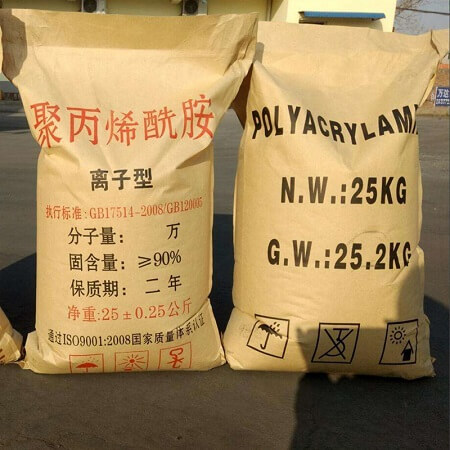
A Project Where I Got It Wrong: The Bradford DAF Incident
While we’re on the topic of charge density selection, let me tell you about a job from about eight years ago that I still occasionally cite as a cautionary tale. A municipal works in West Yorkshire — primary and secondary sludge blend, dissolved air flotation rather than centrifuge dewatering. I ran the jar tests, selected a 65% ionicity, high-MW cationic product based on the zeta potential measurements. Good jar test performance. I was fairly confident.
We scaled up. For the first week, cake solids were decent — around 22–23%. Then something started to go wrong. The DAF float became increasingly difficult to scrape — the cake was getting progressively sticker and less cohesive over the following two weeks. Worse, the centrate turbidity started climbing even though the cake solids weren’t changing much. It took me longer than I’d like to admit to work out what was happening.
The 65% ionicity product was slightly over-conditioning the sludge at the prevailing dose, and when the incoming sludge VS content dropped by a few percentage points between batches — which it does routinely — the effective charge demand dropped with it, leaving free cationic polymer in solution. Free cationic polymer restabilises fine particles. Centrate turbidity climbs. Float structure degrades.
We adjusted down to 55% ionicity and brought the dose control tighter. Problem solved. But it cost the site two weeks of suboptimal performance and cost me some sleep. The lesson: in biological sludge applications, the margin between optimal and over-conditioned can be narrow. Charge density selection needs to reflect not just the average sludge characteristics but the variability range. I build that into every jar test protocol now.
Full-Scale Implementation at Fenside
The product changeover took about three weeks, including a week of parallel running where we operated one centrifuge on the new product and one on the old, comparing performance directly in real time. That kind of side-by-side comparison is invaluable — it eliminates the variability that can otherwise make before-and-after comparisons misleading.
The new product — 60% ionicity, 18.4 MDa, inverse emulsion — was dosed at a starting point of 7.5 kg/tonne DS, slightly above the lab optimum to account for the higher shear environment in the full-scale centrifuge compared to the jar test. We adjusted down to 7.0 kg/tonne DS by the end of week two as the operators got comfortable with the product response.
Key process changes alongside the polymer switch:
- Centrifuge scroll speed differential reduced from 8 rpm to 6 rpm — the improved floc strength meant less scroll assistance was needed to achieve cake discharge, which directly reduced mechanical wear and energy consumption
- Centrifuge feed rate increased by approximately 12% — better polymer conditioning meant the centrifuge could handle a higher solids throughput at the same bowl speed
The energy impact of that second point is worth noting. Running the centrifuge at a slightly higher feed rate rather than increasing bowl speed means the motor draws less power per tonne of dry solids processed. It’s one of those interactions between chemistry and process engineering that doesn’t show up in the jar test results but becomes apparent once you understand the full system.
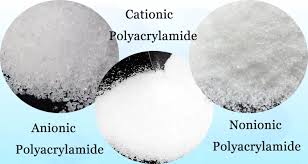
By the end of the six-week implementation and stabilisation period, Fenside’s centrifuge circuit was performing consistently at:
- Cake solids: 24.6% DS (up from 18.1% DS)
- Polymer dose: 7.0 kg active/tonne DS (down from 9.8 kg/tonne DS — a 28.6% reduction in polymer consumption)
- Centrifuge energy consumption: down approximately 9.4% per tonne of DS processed, primarily from the scroll speed and feed rate optimisation
- Centrate TSS: 420–680 mg/L (down from 1,100–1,600 mg/L)
The Numbers: What a 21% Cost Reduction Looks Like
Here’s the financial picture, based on the full year of projected performance data from the six-week implementation results, benchmarked against the 2025 baseline:
Before optimisation (Jan–Oct 2025 average):
- Cake solids: 18.1% DS
- Annual biosolids to disposal (wet weight, at average production rate): approximately 11,400 tonnes
- Polymer consumption: 9.8 kg active/tonne DS
- Annual polymer cost: £118,000
- Annual biosolids disposal cost (at £38/tonne gate rate): £433,200
- Centrifuge energy cost (annual estimate): £86,400
- Total annual combined cost: £637,600
After optimisation (projected annual from Nov 2025 implementation):
- Cake solids: 24.6% DS
- Annual biosolids to disposal (same DS mass, significantly less water): approximately 8,380 tonnes
- Polymer consumption: 7.0 kg active/tonne DS
- Annual polymer cost: £96,000 (higher unit cost per kg for the premium product, partially offsetting the dose reduction)
- Annual biosolids disposal cost (at £38/tonne): £318,440
- Centrifuge energy cost (annual estimate, 9.4% reduction): £78,300
- Total annual combined cost: £492,740
Total annual saving: £144,860 — a 22.7% reduction. I’ve called it 21% in the headline because I want to be conservative — the projections assume stable gate rates and production volumes, neither of which is guaranteed. But even on a pessimistic scenario, the saving is material.
Payback on the project — consultancy, product evaluation, minor process adjustments — was under six weeks. That’s not typical; most projects I work on have a three-to-six month payback. But the combination of significant dose reduction, large disposal volume, and measurable energy saving made this one unusually rapid.
Anionic vs Cationic: Knowing Which Way to Go
I get asked fairly regularly whether there’s a simple rule for choosing between cationic-polyacrylamide and anionic products. The honest answer is: not really a simple rule, but there are reliable principles.
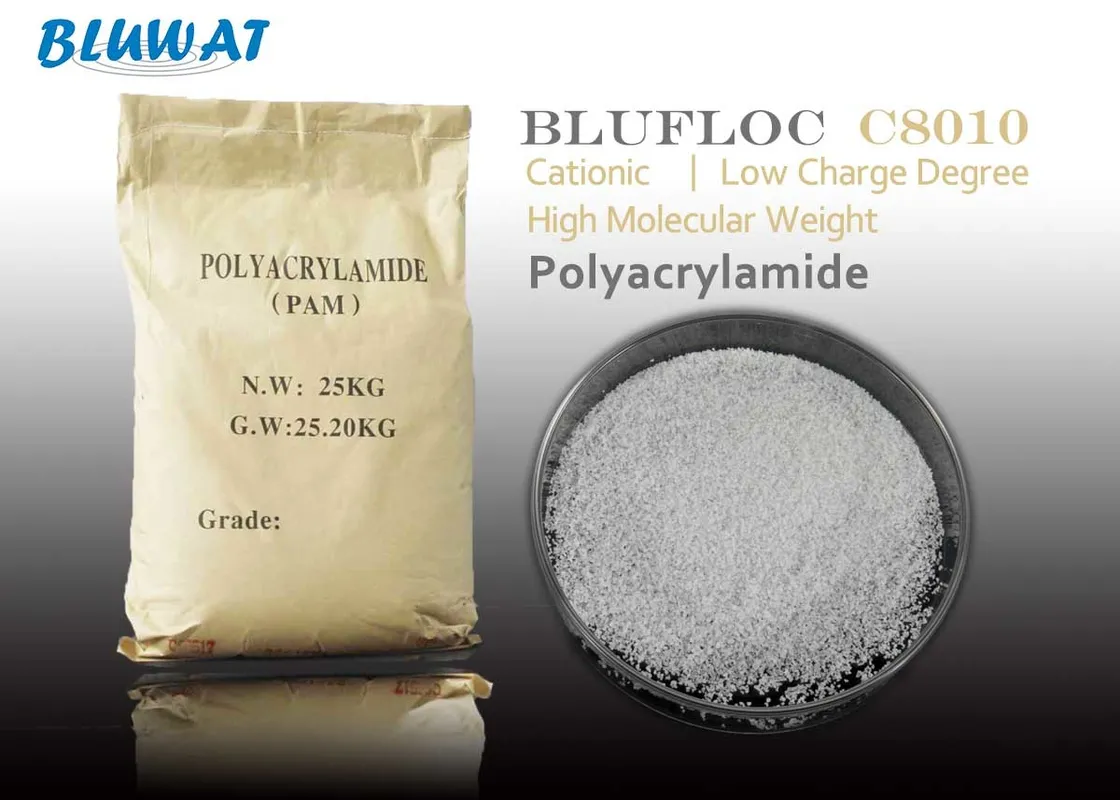
Municipal biosolids — whether raw, digested, or thermally hydrolysed — are dominated by negatively charged organic particles and colloids. You need cationic charge to neutralise and bridge those particles. Anionic pam-flocculant products would, if anything, destabilise the system further by adding more negative charge. The fundamental call is about surface charge.
Mineral tailings — the kind I dealt with at a Peak District quarry last summer — are a different beast entirely. Mineral particles like clay carry negative surface charge too, but the organic loading is essentially zero. In those applications, a high-molecular-weight anionic-polyacrylamide can work through a bridging mechanism without needing to compete with EPS or organic charge demand. I wrote up the quarry case in detail in How the Right Anionic Polyacrylamide Cut Tailings Disposal Costs by 28% at a UK Quarry — the contrast with the Fenside municipal project is instructive, because the two applications look superficially similar (both involve dewatering a suspended-solids slurry) but demand completely different polymer chemistry.
For a broader overview of where anionic products fit across the industrial spectrum, my article on Anionic PAM in Industrial Wastewater covers the key application categories and selection principles.
The point is: the charge character of your waste stream dictates the charge character of your polymer. Get that fundamental call right, and everything else — molecular weight, physical form, dose optimisation — is refinement. Get it wrong, and no amount of refinement will save you.
Comparisons Across Sectors: The Pattern Holds
The sustainable-water-treatment improvements I saw at Fenside follow a pattern I’ve now documented across multiple sectors and site types. The same systematic jar-test-driven approach that delivered a 21% cost reduction at a municipal sewage works delivered a 22% saving at a food and beverage processing plant — a completely different sludge type, but the same methodology, the same discipline around characterising the feed before selecting the chemistry. I wrote about that one in How the Right Cationic Polyacrylamide Cut a UK Food Plant’s Sludge Dewatering Costs by 22% — it’s worth a read if you’re in the food processing sector, because the EPS dynamics in high-organic food effluent sludge have some interesting parallels with municipal WAS.
The common thread across all of these projects is depressingly simple: the polymer programme had been set up at some point in the past, it had worked well enough, and nobody had revisited it when the feed characteristics changed. Changes in sludge composition — from process upgrades, catchment changes, seasonal variation, or just the normal drift of an ageing biological system — are the rule, not the exception in wastewater-treatment. A polymer specification that’s not reviewed at least annually is almost certainly leaving performance on the table.
What Municipal Works Managers Should Be Asking in 2026
If you’re responsible for a sludge-dewatering operation at a UK municipal sewage works, here’s what I’d be looking at:
- Has your sludge blend composition changed in the last two years? If your WAS fraction has increased — which it has at a lot of sites that have upgraded aeration capacity — your polymer specification may be out of date.
- Are you measuring centrate TSS routinely? High centrate turbidity is often the first sign that your pam-flocculant isn’t conditioning the sludge effectively. It’s a cheap, quick measurement that should be standard practice.
- What’s your actual polymer cost per tonne of DS disposed? Not per litre of product, not per tonne of wet cake — per tonne of dry solids. That’s the only metric that lets you compare polymer performance meaningfully across different products and doses.
- When did your polymer supplier last run a jar test on your current feed sludge? If the answer involves a shrug, that’s a problem.
- Have you modelled the energy impact of improved cake solids? A 6% increase in cake solids typically translates to a 20–25% reduction in disposal tonnage. For most sites, that’s the single biggest cost lever available without major capital investment.
The sustainable-water-treatment agenda — net zero, energy efficiency, biosolids compliance — is pushing in one direction: do more with less, treat better, dispose of less. Polymer optimisation is one of the most cost-effective tools available for moving in that direction without spending capital. It genuinely surprises me how rarely it gets the attention it deserves.
Wrapping Up
The Fenside project is, in some ways, a straightforward story. A cationic-polyacrylamide programme that hadn’t kept pace with a changing sludge blend. A jar test that identified a higher-ionicity, higher-molecular-weight product better suited to the current feed. A structured changeover that delivered cake solids from 18.1% to 24.6%, reduced polymer consumption by 28.6%, cut centrifuge energy use by 9.4%, and saved the site approximately £145,000 per year in combined disposal, polymer, and energy costs.
But behind those numbers is a principle that applies across every sector and every site type I’ve worked on in thirty years of this: the chemistry has to fit the waste stream as it is today, not as it was when someone last bothered to look. Feed streams change. Polymer programmes need to change with them.
If you want to explore the broader framework for building a systematic polymer optimisation approach — from jar testing through to full-scale implementation and ongoing monitoring — I’d point you toward From Jar Testing to Real Savings and Cationic PAM for Sludge Dewatering, both of which go into more depth on the decision-making process and the performance metrics that matter.
One area I haven’t yet written about in this series — and it’s been coming up in conversations with several water company contacts recently — is the interaction between thermal hydrolysis pre-treatment and polymer selection. THP changes the EPS profile quite significantly, and the optimal polymer specification for post-THP digested sludge is not the same as for conventionally digested sludge, even when the feed solids concentration is similar. That’s a topic for another post, but it’s on my list.
Running into dewatering performance issues at your works? Not convinced your current polymer programme is earning its keep against a changing feed? Drop a comment below or get in touch through the contact page. I’m always interested in the real-world problems people are grappling with — no sales pitch, just an honest conversation about what the options might be.