Ordering PAM samples for brewery sludge starts with identifying the stream. Surplus yeast, biological sludge, DAF solids and combined effluent are not interchangeable samples. A supplier cannot make a useful recommendation from the word brewery alone, and procurement should not compare quotations that were developed for different separation duties.
Describe where the sample comes from
Mark the sampling point and explain which streams enter it. Include solids content where measured, storage time and whether cleaning chemicals can reach that location. Describe the intended separation equipment and what currently limits operation. A problem with draining stored yeast is different from a clarification problem at the combined wastewater outlet.
Discuss the stream with Xinqi's PAM supply team before requesting an order quantity. The cationic polymer family can inform screening, but neither charge type nor a previous brewery reference proves suitability for this particular feed.
Make the sample programme representative
Agree sample quantity, container and handling with the receiving laboratory. Record collection time and conditions; changes during transport or storage can affect interpretation. Include relevant production variation instead of selecting only a visually uniform sample. Avoid combining incompatible or poorly identified streams merely to fill a container.
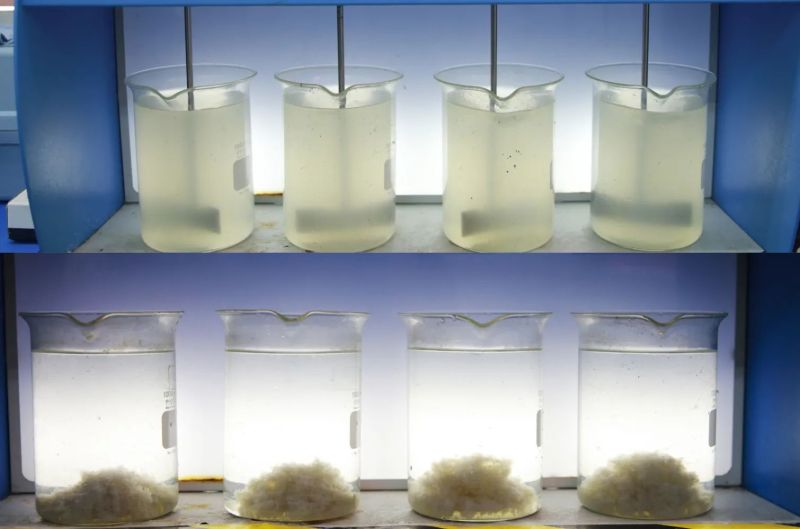
Compare candidates under documented preparation and mixing conditions. Record filtrate or clarified-water quality, drainability and the resulting solids handling. Where a cleaning transition changes pH or conductivity, identify that condition rather than averaging it away in the report.
Define what a trial order includes
Ask for labelled grades, technical and safety information, preparation guidance and enough material for the agreed screening work. State whether the quoted amount covers laboratory testing only or a supervised plant trial. Clarify freight and any technical attendance; do not assume they are included because the initial sample itself has no charge.
Release bulk supply only after scale-up
A laboratory result should lead to a controlled equipment trial with agreed acceptance criteria. Keep feed, dose basis, throughput and return-liquor measurements together. Confirm packaging and preparation compatibility before increasing stock. If the process alternates between concentrated yeast and mixed biological sludge, establish whether one programme has a usable operating range or whether the duties need separate purchasing specifications.
Prepare the next purchasing step
For the underlying operating checks, read Cationic Polymer for Brewery Wastewater Sludge Dewatering. Include the relevant feed information, equipment, planned quantity and delivery location when requesting a product quotation or sample. Agree the trial scope before placing routine supply.