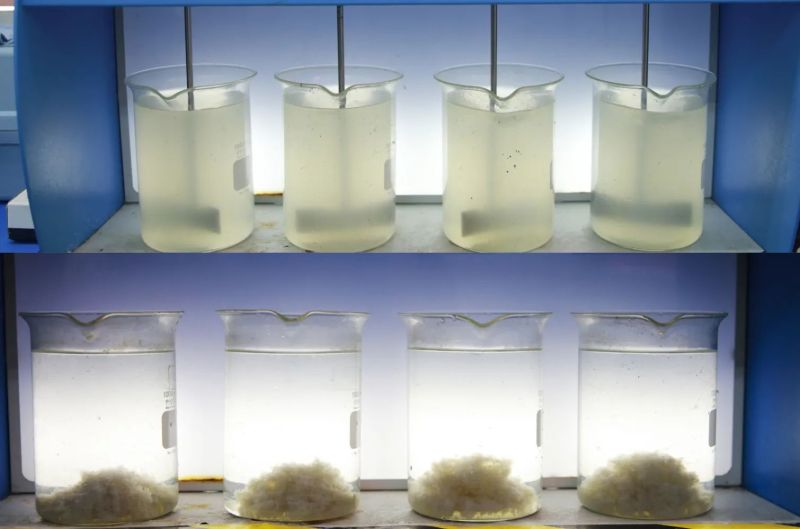
Quarry thickener flocculant contracts should address both recovered water and the solids leaving the thickener. A rapid settling result is not enough if the underflow becomes difficult to withdraw or the downstream press cannot accept it. State the plant constraints before suppliers optimise for one attractive laboratory measurement.
Define the mineral feed and water loop
Describe the aggregate or mineral source, fines variation, process-water reuse and existing chemical sequence. Include feed flow and solids measurements where available. Record changes associated with different working areas or production blends. A sample from one stockpile may not qualify a product for the whole quarry programme.
When asking Xinqi for flocculant candidates, include the thickener and downstream equipment information. An anionic PAM reference is a useful starting point for many mineral suspensions, but the charge and product form still require testing on the actual feed.
Compare several separation outcomes
Record settling behaviour, overflow clarity and the condition of the settled solids at a defined time. During plant trials, include underflow concentration, withdrawal behaviour and relevant equipment operating signals. Do not judge a candidate only by the clearest overflow if the water-recovery improvement comes with an unacceptable solids-handling problem.
Keep mixing and feed conditions recorded. The trial should not depend on exceeding equipment limits or ignoring an unstable bed. Changes to rake operation or pumping need the appropriate operational approval and should be distinguished from the chemical comparison.
Request a realistic quotation basis
Ask for product consumption on a stated commercial or active basis and the expected preparation demand. Identify delivery form, package size and any proposed make-down modifications. Include whether the offered trial support covers the downstream press as well as the thickener; one stage can transfer costs to another.
Write the acceptance boundary
Agree minimum water-recovery quality and workable underflow conditions within the tested feed range. Compare total chemical use and operating consequences over representative production, rather than extrapolating a short optimum run. Define when a change of mineral source triggers retesting. The resulting order should preserve an accepted process window and an investigation route, not promise one fixed dose for every future quarry feed.
Prepare the next purchasing step
For the underlying operating checks, read Quarry Wash Plant Water Balance and Flocculant Dose Control. Include the relevant feed information, equipment, planned quantity and delivery location when requesting a product quotation or sample. Agree the trial scope before placing routine supply.